top of page

Jaw surgery (orthognathic surgery) is life-changing, but patients often feel anxious about recovery. Knowing what happens in each stage helps reduce stress and allows you to prepare properly. This guide covers the week-by-week recovery timeline, plus tips to heal faster.
The First 24–48 Hours
Surgery is performed under general anesthesia.
Expect swelling, mild bleeding, and numbness.
Hospital stay: usually 1–2 nights for monitoring.
Pain is controlled with medication.
Week 1 – Immediate Post-Surgery Phase
Significant facial swelling and bruising.
Liquid or pureed diet.
Limited jaw movement; elastic bands may guide your bite.
Regular saline rinses and gentle hygiene.
Rest is critical.
Week 2 – Swelling Peaks, Then Improves
Swelling and bruising begin to reduce.
Discomfort decreases with medication.
Patients usually return home routines, but still on soft/liquid foods.
Follow-up visit scheduled to monitor healing.
Week 3–4 – Early Healing
Swelling continues to subside.
Stitches dissolve or are removed.
Diet expands to soft foods (scrambled eggs, pasta, etc.).
More comfortable speaking and moving the jaw.
Begin light activities (avoid heavy exercise).
Month 2–3 – Functional Recovery
Most swelling is gone.
Pain minimal or absent.
Jaw strength improves, more natural chewing possible.
Orthodontic adjustments continue if braces are part of treatment.
Patients often return to school/work by this phase.

Month 4–6 – Long-Term Healing
Full chewing ability restored.
Numbness around lips/chin (if present) gradually resolves.
Final facial balance becomes more noticeable.
Confidence improves as swelling disappears.
Final follow-ups and orthodontic finishing touches.
Tips to Heal Faster After Jaw Surgery
Follow your surgeon’s dietary instructions strictly.
Sleep with your head elevated to reduce swelling.
Avoid smoking or alcohol (slows healing).
Practice good oral hygiene with recommended rinses.
Keep all follow-up appointments.
When to Contact Your Surgeon
Persistent high fever
Severe pain not relieved by medication
Sudden swelling increase
Difficulty breathing or swallowing
👉 Want the full picture? Read our Complete Guide to Orthognathic Surgery.
4 Oct 2025
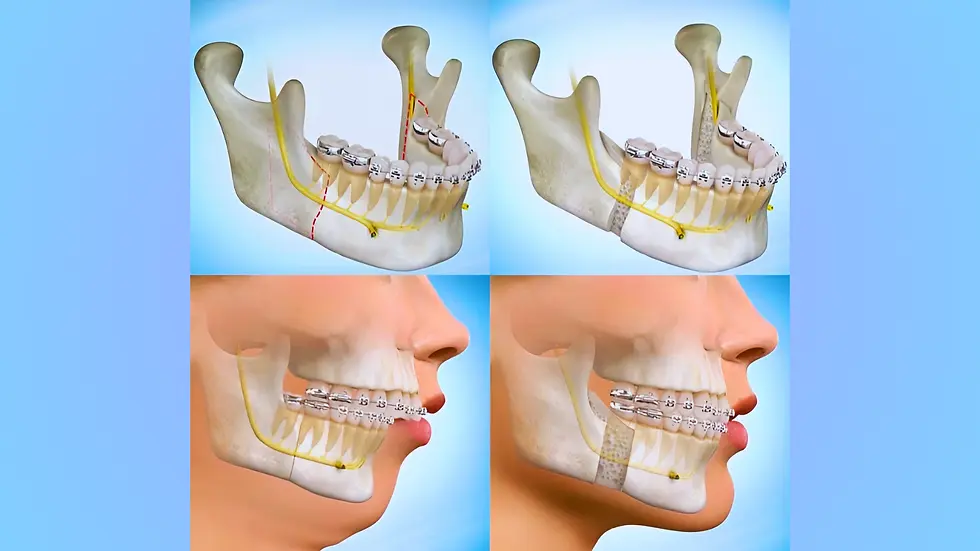
Understand the recovery timeline after orthognathic (jaw) surgery — week by week guidance to help you heal confidently and comfortably.
.webp)
Jaw Surgery Recovery Timeline: What to Expect Week by Week
Yes, in many cases the face looks more balanced and symmetrical, which is one of the benefits of orthognathic surgery.
Will my face look different after jaw surgery?
Soft foods are allowed after 2–3 weeks. Normal chewing usually resumes after 2–3 months.
When can I eat normally after orthognathic surgery?
Most patients recover within 3–6 months, but major improvements are seen in the first 6 weeks.
How long does recovery take after jaw surgery?
Frequently Asked Questions
Dr. Surendranath is a Maxillofacial Surgeon and Implantologist with over 15 years of expertise. He specializes in advanced dental implantology, including All-on-4, All-on-6, and Zygomatic implants, and has successfully completed more than 25,000 implant surgeries. Known for his precision and patient-focused care, he leads YOUR DENTIST in providing world-class dental solutions.
15+ years experience, 25,000+ implant surgeries
MDS, OMFS, Implantologist
Dr. E. Surendranath

bottom of page