top of page

Many people are told they “don’t have enough bone for implants,” especially in the upper jaw. The PATZI Implant Protocol is a breakthrough full-arch technique designed specifically for patients with severe bone loss — providing fixed teeth even when traditional implants or All-on-4 are not possible.
This guide will help you understand:
What the PATZI protocol means
Why it’s used
How it works in simple terms
Who qualifies and who doesn’t
Why it’s one of the most successful options for extreme bone loss
Let’s break it down in the simplest way.
What Is the PATZI Implant Protocol? (Explained Simply)
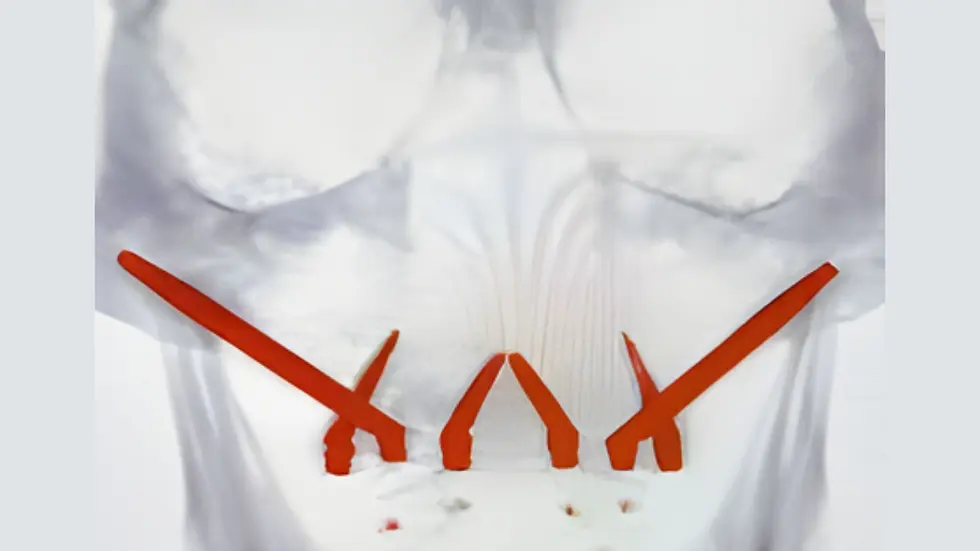
PATZI is an advanced method for replacing all teeth in the upper jaw using strong anchor points in the facial bones.
It stands for:
P — Pterygoid implants (back of upper jaw)
A — Anterior implants (front jaw)
T — Tilted implants (implants placed at an angulation to each other)
Z — Zygoma implants (cheekbone implants)
I — Immediate loading (fixed teeth within 72 hours)
By combining these implants, surgeons create a rock-solid foundation for a full set of fixed teeth, without bone grafts or sinus lifts.
Why Was the PATZI Protocol Created?
Traditional implants require good bone.But most patients with missing upper teeth have:
Severe bone loss
Enlarged sinus spaces
Weak or thin jawbone
Dentures that no longer fit
Failed previous implants
For these cases, conventional methods fail.
PATZI was developed to solve exactly these problems — giving stability from multiple strong regions like the cheekbone, pterygoid plate, and nasalis.
PATZI in Simple Words
Think of your upper jaw like a table.
If the table legs are weak or missing, the table collapses.
PATZI adds new, stronger legs in areas where the bone is strongest:
Cheekbone (very strong)
Pterygoid plate (dense bone)
Nasal Floor (thicker bone)
This allows the “tabletop” (your fixed teeth) to be placed safely.
How the PATZI Technique Works?
1. Pterygoid implants (P)
Placed at the back of the mouth into a very strong bone region.
2. Anterior implants (A)
Placed in the front jaw where bone remains even in severe bone loss.
3. Tilted implants (T)
Implants placed in a tilted fashion to obtain mechanical stability.
4. Zygoma implants (Z)
Placed into the cheekbone for maximum strength.
5. Immediate loading (I)
Teeth are fixed in 72 hours because the implant anchorage is extremely solid.

PATZI vs Other Advanced Implants
Feature | All-on-4 | Zygoma Only | Pterygoid Only | PATZI | ||
Severe bone loss | ❌ Poor | ✔ Good | ✔ Good | ⭐ Best | ||
Full arch stability | ✔ Good | ✔ Very good | ✔ Very good | ⭐ Maximum | ||
Graft needed? | Sometimes | ❌ No | ❌ No | ❌ No | ||
Immediate fix teeth | ✔ Yes | ✔ Yes | ✔ Yes | ⭐ Best stability | ||
Best for failed denture cases | ✔ | ✔ | ✔ | ⭐ Best |
PATZI is the most comprehensive solution for upper jaw bone loss.
🌟Who Is the Right Candidate for the PATZI Protocol?
You are an ideal candidate if:
✔ You have severe upper jaw bone loss
✔ You cannot receive normal implants
✔ You have failing dentures
✔ You have loose, mobile upper teeth
✔ You have had sinus lifts fail
✔ You want fixed teeth, not removable dentures
✔ You want a graft-free option
✔ You want fixed teeth in 72 hours
Even people told “IMPOSSIBLE” by other clinics often qualify.

Candidates With Bone Loss (Most Common)
If you have:
Sinus expansion
Weak posterior bone
Long-term missing teeth
Deteriorated bone from gum disease
PATZI can still give you a fixed teeth set.
Who May Need Extra Evaluation?
You may need additional planning if you have:
Uncontrolled diabetes
Active infections
Chronic smoking
Severe medical conditions
However, after stabilization, most still qualify.
🚫Who Is NOT a Candidate for PATZI?
In rare cases:
❌ Uncontrolled medical conditions
❌ Poor oral hygiene habits
❌ Severe psychiatric limitations
❌ Refusal to follow post-treatment care
But exclusions are rare — PATZI is designed for complex cases.
🔍PATZI Procedure Overview (Simple Step-by-Step)
Step 1 — CBCT Scan
Complete 3D mapping of bone structure.
Step 2 — Digital Planning
Implant positions are digitally designed.
Step 3 — Implant Placement
Zygoma, Pterygoid, and Anterior implants placed as per need.
Step 4 — Temporary Fixed Teeth in 72 Hours
You leave with fixed temporary teeth.
Step 5 — Final Teeth After 3–4 Months
Custom zirconia or ceramic teeth placed permanently.
🧩Why PATZI Gives Stronger, Longer-Lasting Results?
Anchors implants into the strongest bones
Eliminates bone grafts
Perfect for severe bone loss
Allows immediate function
Works even after failed implants
Offers excellent long-term survival rates
23 Nov 2025
A simple, patient-friendly guide to the PATZI Implant Protocol. Understand what it is, how it works, and who is the ideal candidate for this advanced full-arch technique.
PATZI Implant Protocol: Simple Guide & Who Is the Right Candidate
Because it supports cases where All-on-4 is not possible due to bone loss.
Why is PATZI better than All-on-4?
No, it is done under anesthesia and recovery is smooth.
Is PATZI a painful procedure?
Within 72 hours in most cases.
How long until I get teeth?
Yes — PATZI is designed for extreme bone loss.
Can I get PATZI if I have no bone left?
It stands for Pterygoid, Anterior, Transitional, Zygoma, and Immediate loading.
What does PATZI stand for?
Frequently Asked Questions
Dr. Surendranath is a Maxillofacial Surgeon and Implantologist with over 15 years of expertise. He specializes in advanced dental implantology, including All-on-4, All-on-6, and Zygomatic implants, and has successfully completed more than 25,000 implant surgeries. Known for his precision and patient-focused care, he leads YOUR DENTIST in providing world-class dental solutions.
15+ years experience, 25,000+ implant surgeries
MDS, OMFS, Implantologist
Dr. E. Surendranath

bottom of page