top of page

Wisdom tooth problems rarely appear overnight.They usually start with mild discomfort that comes and goes — until one day the pain becomes unbearable, the gums swell, or the mouth won’t open properly.
Ignoring these warning signs can lead to serious infection, bone damage, and repeated pain episodes. Here are the 7 most important signs that your wisdom tooth should be removed — without delay.
1. Persistent Pain at the Back of the Jaw
Pain near the last molar is the most common sign.
You may feel:
Dull aching pain
Sharp pain while chewing
Pain radiating to ear or temple
This usually indicates:
Pressure from an impacted tooth
Infection under the gum
Damage to the neighboring tooth
Pain that lasts more than a few days should never be ignored.
2. Swollen, Red, or Bleeding Gums
Inflamed gums around a wisdom tooth often indicate pericoronitis — an infection caused by bacteria trapped under the gum flap.
Signs include:
Red, puffy gums
Bleeding while brushing
Bad taste or pus discharge
This infection can spread quickly and may recur repeatedly unless the tooth is removed.
3. Difficulty Opening Your Mouth (Trismus)
If your jaw feels tight or you struggle to open your mouth fully, the infection may be spreading to the jaw muscles.
This can cause:
Jaw stiffness
Pain while talking or eating
TMJ strain
Trismus is a warning sign that surgical extraction is required urgently.
4. Repeated Infections or Swelling
If swelling keeps coming back every few months, the problem is structural, not temporary.
Recurring infections mean:
Antibiotics are only masking the issue
Bacteria remain trapped
The tooth position will not improve
Repeated infections increase the risk of bone loss and cyst formation.
5. Bad Breath or Persistent Bad Taste
A constant bad smell or taste often means:
Pus formation
Food impaction under the gum
Bacterial buildup around the tooth
No mouthwash can fix this permanently — surgical removal is the solution.
6. Damage to the Adjacent (Second) Molar
Impacted wisdom teeth often press against the second molar, causing:
Cavities on the back surface
Gum disease
Root resorption
Bone loss
By the time pain appears, permanent damage may already have occurred.
Early extraction protects your healthy teeth.
7. Cyst Formation Around the Wisdom Tooth
Long-standing impacted teeth can form dentigerous cysts inside the jawbone.
Cysts can:
Grow silently
Destroy jawbone
Weaken the jaw
Displace teeth
Require complex surgery later
Early removal prevents cyst-related complications.
Why Waiting Makes Things Worse?
Delaying extraction can lead to:
Increased surgical difficulty
Higher risk of nerve involvement
Longer healing time
Greater post-op swelling
More bone removal
Removing wisdom teeth earlier is simpler, safer, and faster.
How We Evaluate Wisdom Teeth at YOUR DENTIST?
Our OMFS assessment includes:
Clinical examination
Digital OPG X-ray
3D CBCT scan (if nerve proximity is suspected)
This ensures maximum safety during surgical extraction.
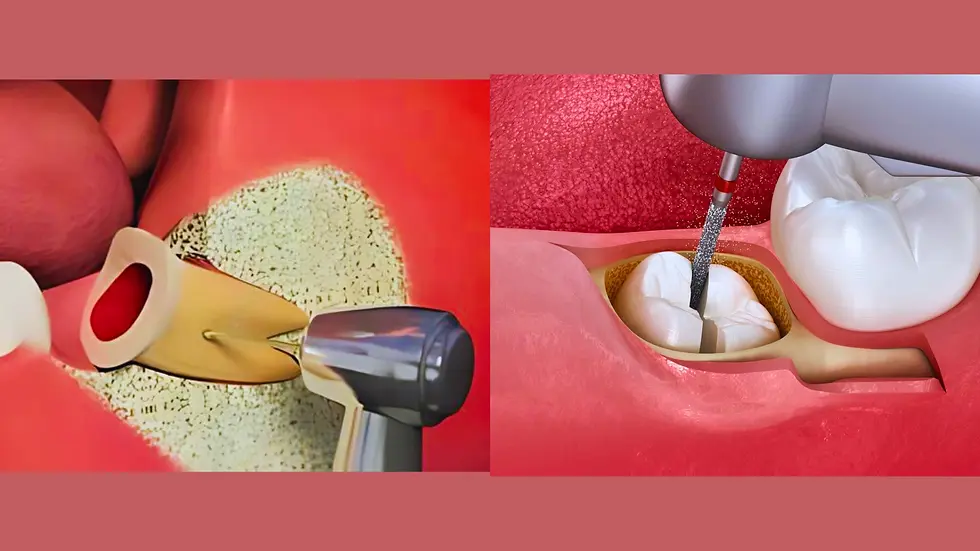
What to Expect After Surgical Removal?
Procedure time: 20–30 minutes
Pain control with anesthesia
Mild swelling for 2–3 days
Normal routine in 3–5 days
Most patients are surprised by how smooth recovery is.
12 Dec 2025
Ignoring wisdom tooth problems can lead to infection and jaw damage. Learn the 7 warning signs that mean you need surgical removal right away.
%203.webp)
7 Signs Your Wisdom Tooth Needs Removal Immediately
No. Antibiotics reduce infection temporarily but do not fix the underlying cause.
Can antibiotics cure wisdom tooth infection permanently?
If pain is recurrent or due to impaction, surgical removal is recommended.
Do all painful wisdom teeth need surgery?
Yes. Delay can cause infection, bone loss, and damage to nearby teeth.
Is it dangerous to delay wisdom tooth removal?
Frequently Asked Questions
Dr. Surendranath is a Maxillofacial Surgeon and Implantologist with over 15 years of expertise. He specializes in advanced dental implantology, including All-on-4, All-on-6, and Zygomatic implants, and has successfully completed more than 25,000 implant surgeries. Known for his precision and patient-focused care, he leads YOUR DENTIST in providing world-class dental solutions.
15+ years experience, 25,000+ implant surgeries
MDS, OMFS, Implantologist
Dr. E. Surendranath

bottom of page